Austin Waits at the End of Formula 1’s Long October Road
Formula 1 returns to Circuit of The Americas from 23 to 25 October. The 5.513-kilometre Austin circuit rewards commitment and precision, with its steep climb to Turn 1 and a sequence of corners that asks each car to change direction without losing its balance.
ViPeople Motorsport DeskPublished 7 min read
Photograph: Formula 1
Audio articleListen to this storySerena (Enhanced) · English UK
Austin gives Formula 1 a circuit with a proper sense of arrival. The road rises towards Turn 1, where the track appears to lift into the Texas sky before dropping into a tight left-hander. It is a broad, visible corner, but never a simple one. A driver has to brake hard, choose a line through traffic and leave enough room for the long sequence that follows.
The United States Grand Prix runs from 23 to 25 October at Circuit of The Americas. It is Round 18 of the 2026 championship and the next stop after Singapore. The main Grand Prix is scheduled for 56 laps over the 5.513-kilometre circuit. Those facts set the scale. The track’s character comes from how quickly it changes its demands.
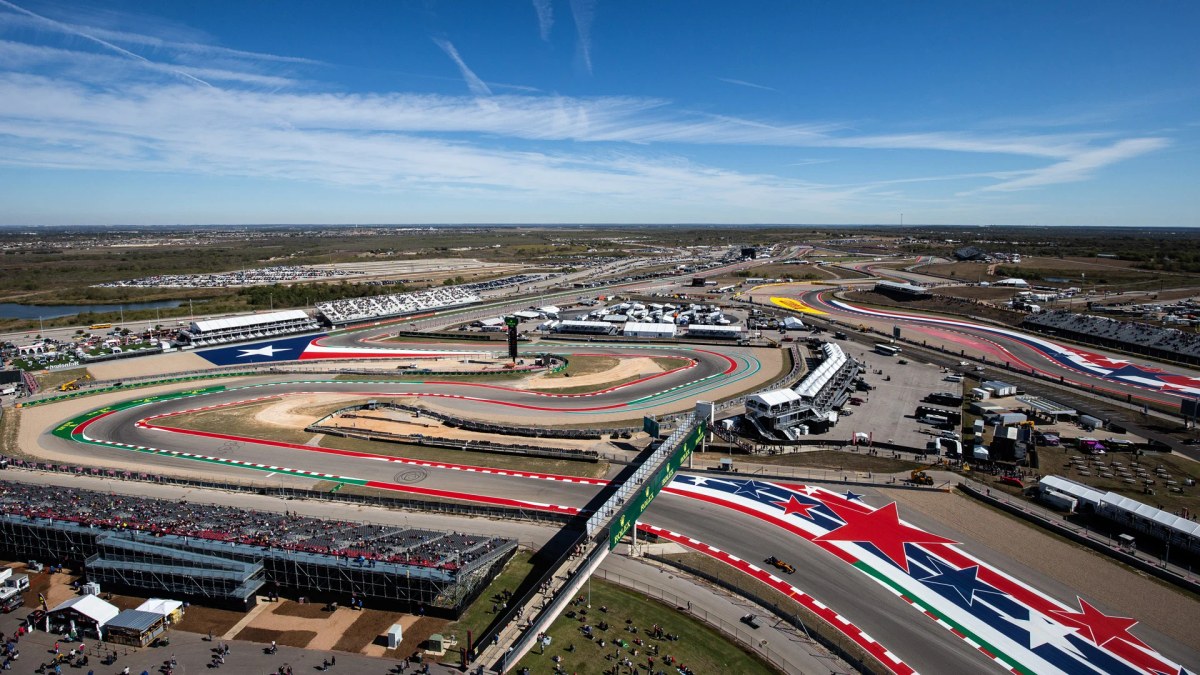
Circuit of The Americas spreads across the Austin landscape. The archive photograph shows the venue, not the 2026 grid.Photograph: Formula 1
A circuit designed to make rhythm visible
The first sector is a series of linked direction changes. It rewards a car that can turn in cleanly and remain composed as the load moves from side to side. The driver must make the front respond without asking the rear tyres to carry too much of the work. A missed apex at the beginning can unsettle the next corner, then the next one after that.
Further round the lap, the long back straight creates a different calculation. Teams need enough speed to defend and attack, yet the final sector asks for traction and control through slower corners. Austin is not a one-setting circuit. A car trimmed for straight-line pace can feel nervous in the direction changes. A car that sits heavily on the road may give away an invitation to pass.
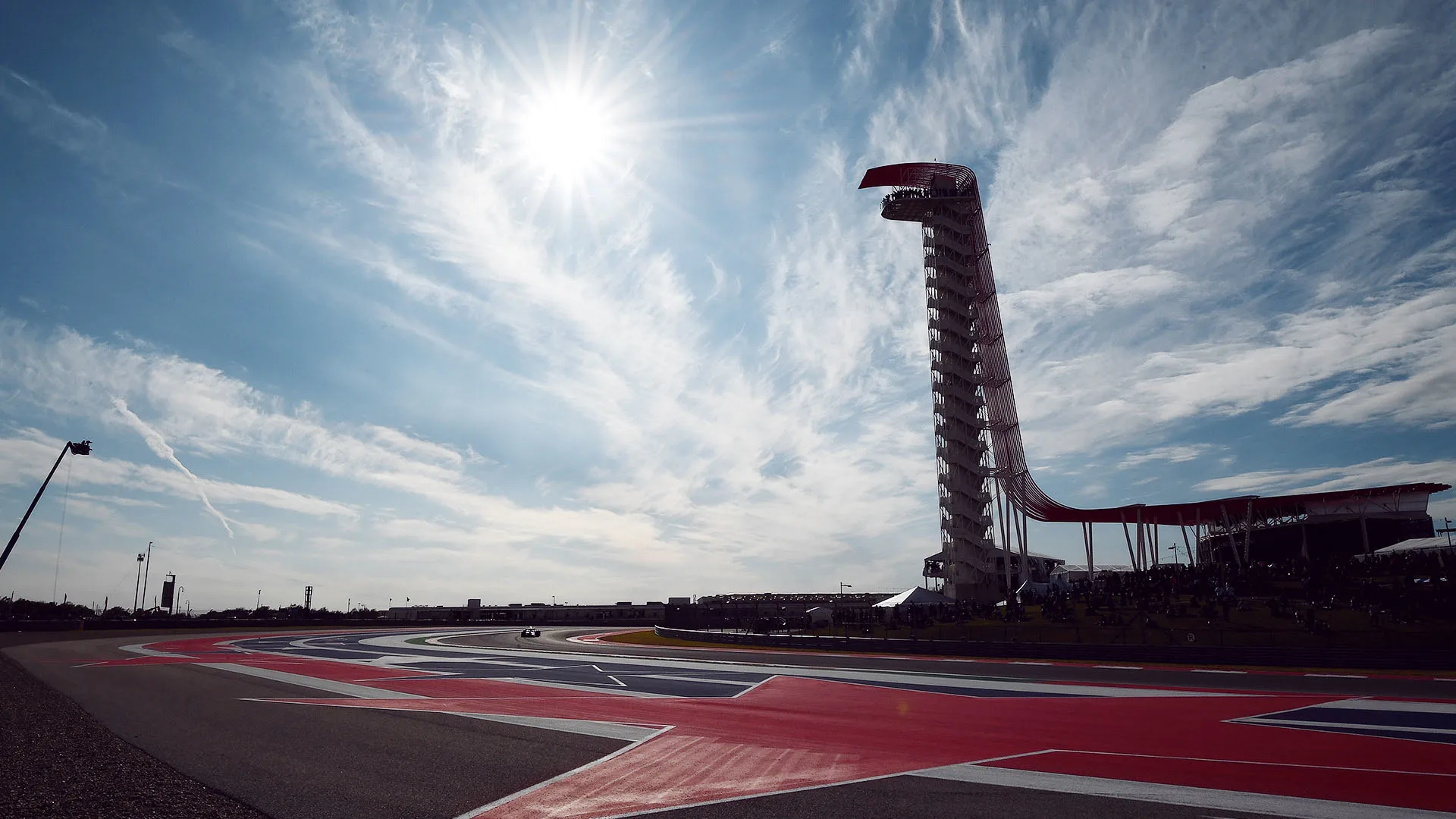
The circuit’s steep observation tower stands beside a fast section of the Austin track in this earlier United States Grand Prix image.Photograph: Formula 1
That mixture makes COTA useful to engineers. It asks questions about aerodynamic balance, tyre management, braking stability and mechanical grip in one lap. It also makes the race legible from the grandstands. The climb to Turn 1, the long straight and the close cornering create places where decisions can be seen rather than hidden in the data.
The opening corner can shape the whole Sunday
Turn 1 has become one of the United States Grand Prix’s defining images. The steep approach gives a driver an unusual view of the braking point. Several lines can carry speed through the corner, and a car can appear to have won the argument before the track opens out on the exit. It is also a place where an overambitious move can compromise both drivers’ races.
The long run into the corner makes the start a test of judgement as well as reaction. Drivers need to defend without crossing the point where they sacrifice the exit. The first lap is rarely decisive on its own, but it can shape the first stint, influence tyre temperatures and put a car into or out of traffic. From there, the race settles into the slower work of making pace repeatable.
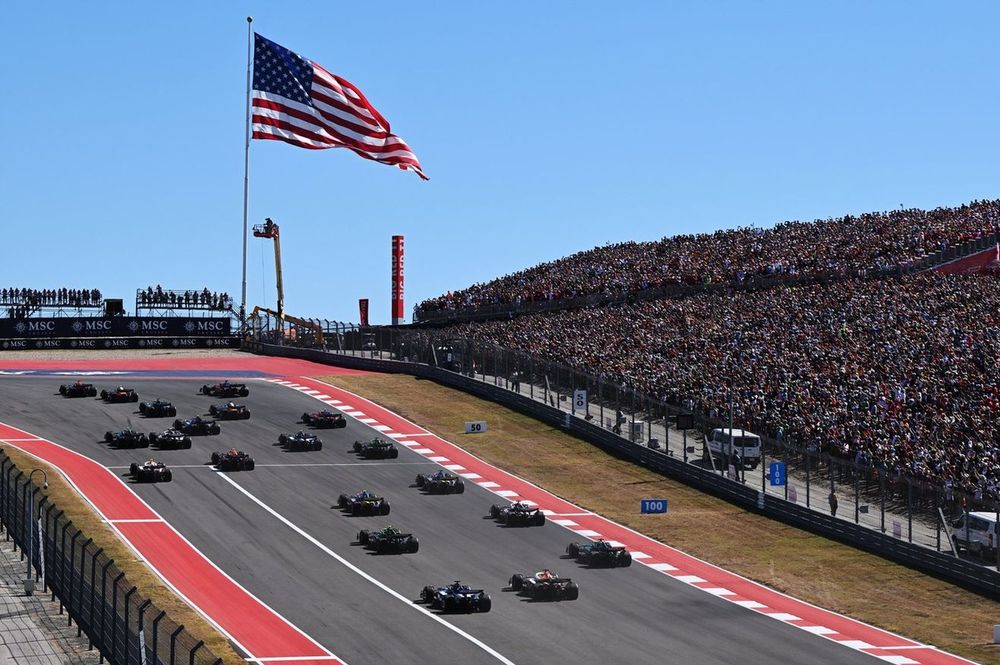
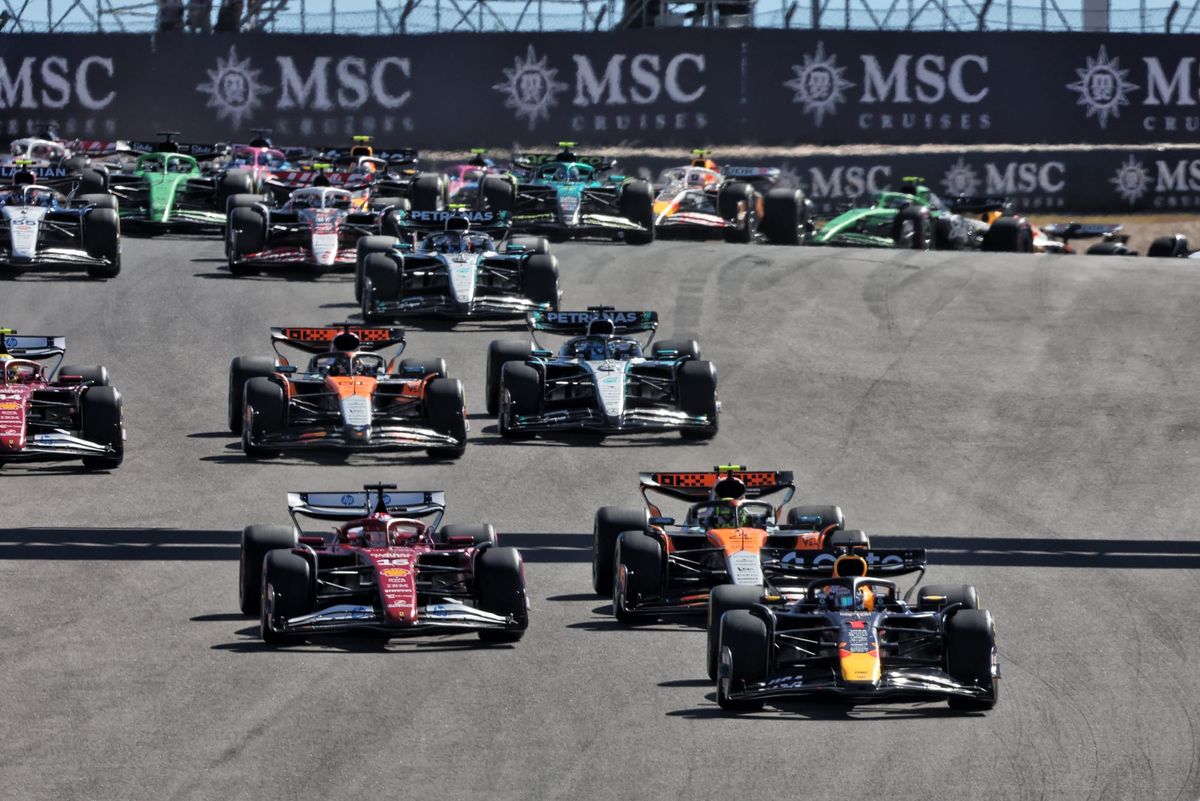
The field climbs towards Turn 1 at the 2025 United States Grand Prix. The steep opening corner makes the first braking zone one of COTA’s defining moments.
A familiar stop in a championship still moving
The Austin race has become one of Formula 1’s most established visits to the United States. Its role in 2026 is straightforward: another full championship round in a country where the series now has several distinct homes. COTA has its own identity, built around a permanent circuit, a wide layout and a setting where the sport can put grandstand crowds close to the shape of the lap.
Singapore has just been the previous round, so the paddock arrives in Texas with little time to settle. The machines must change from a tight, high-downforce street circuit to a wide permanent track with long acceleration zones and flowing corners. Data from previous Austin races helps. It cannot remove the questions created by the current car, current tyre and current championship pressure.
A 2025 start at COTA shows how quickly the field compresses on the run towards the first corner.Photograph: XPB Images / The Race
That is why a preview should stop short of pretending to know the result. Practice will show which teams can keep their cars stable in the esses and which can make the long straight work for them. Qualifying will reveal whether a driver can connect the lap from Turn 1 to the final corner. Sunday will decide whether that speed can be kept through traffic, pit stops and the changing condition of the surface.
The challenge is to make speed last
A fast lap at Austin is an act of trust. The driver commits to a corner before knowing how much the rear tyres will give on exit. The engineer tries to build a car that can repeat the manoeuvre. The team watches the weather, track temperature and tyre behaviour. Across 56 laps, the best performance is the one that survives every compromise.
COTA offers a proper autumn test for Formula 1: one that rewards a bold first corner, a calm hand through the esses and a car that can accelerate cleanly when the track opens. The circuit has staged spectacular moments before. On this return, the new ones will come from the decisions made between them.
Comments0
Join the ViPeople conversationSign in with Google to comment, like and save stories.Continue with Google