
The V8 Is Calling Formula 1 Back. The Important Question Is What Comes With It
FIA president Mohammed Ben Sulayem has again put a V8 return on the horizon, with reports from Kigali pointing to 2030. It is a powerful prospect for fans, though the final formula still has to reconcile sound, sustainability, electrification and manufacturer support.
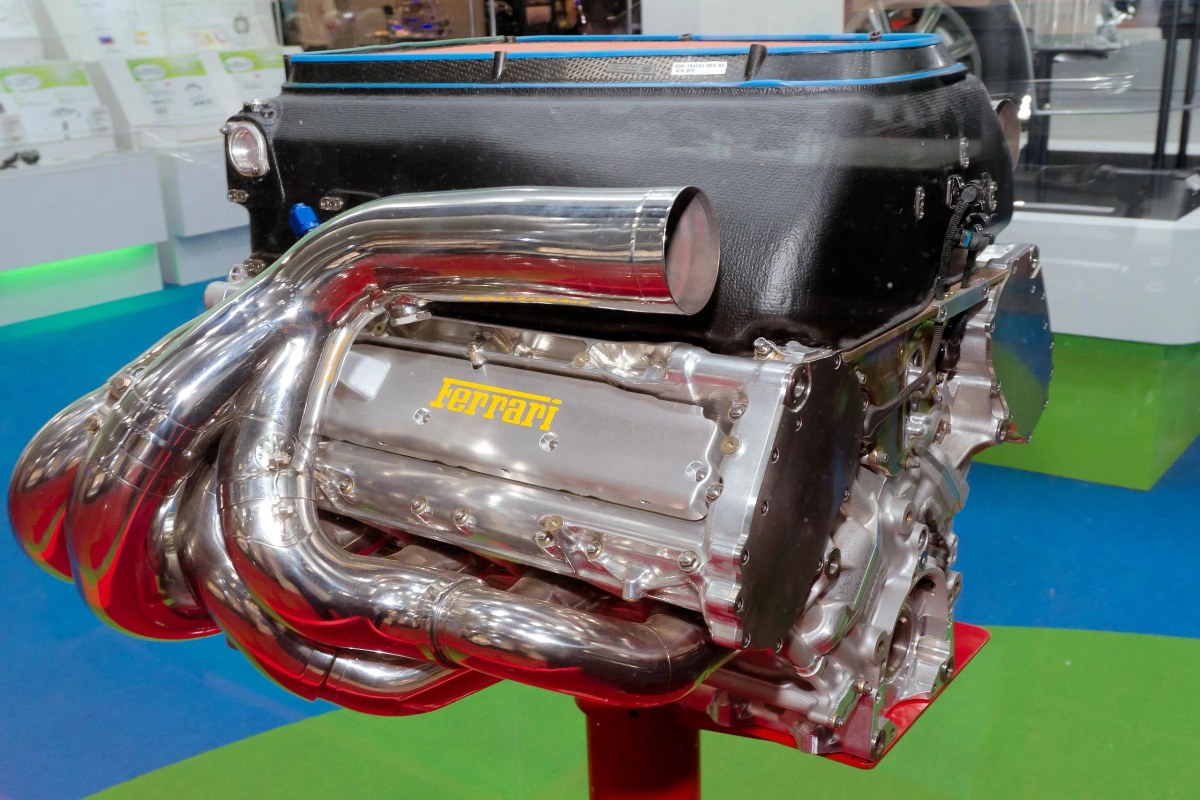
Photograph: New Atlas- FIA president’s stated direction
- V8 power units
- Timing reported after Kigali announcement
- 2030 target
- Current rules cycle
- 1.6-litre V6 hybrid power units from 2026
- Fuel direction
- Advanced sustainable fuel remains central to the debate
- Final technical regulations
- Not yet published as a settled package
The V8 has returned to Formula 1’s future tense. At a moment when the sport is learning a new generation of hybrid cars, FIA president Mohammed Ben Sulayem has renewed his call for a simpler, lighter engine with the familiar eight-cylinder note. Reporting after the Rwanda Grand Prix announcement points to 2030 as the target. The direction is compelling. The engineering and political detail still matters more than the headline.
The first distinction is between a strong statement of intent and a completed set of regulations. Ben Sulayem has argued that a V8 is coming, and that the FIA could impose a change for 2031 under its regulatory powers, with 2030 possible if the required manufacturer support is secured. Formula 1 has not yet published a final 2030 power-unit rulebook that settles the architecture, electrical contribution, fuel flow, weight, cost controls or transition arrangements.
Why the sound matters, and what else the rules must answer
A V8 carries an emotional memory that Formula 1 has never quite lost. From 2006 through 2013, the naturally aspirated engines gave the sport a crisp, rising note that travelled through grandstands and television microphones with unusual clarity. Fans remember the sound because it helped make speed feel immediate. A car could be heard before it was seen, and the engine’s climb through the rev range became part of the weekend’s rhythm.
Sound alone cannot define a modern power unit. The rules must also give manufacturers a credible technical purpose, teams predictable costs and the championship a responsible fuel story. The 2026 package couples a 1.6-litre turbocharged V6 with much more electrical power than the previous cycle, alongside fully sustainable fuel. Its complexity has put energy management and battery deployment at the centre of the conversation. A V8 proposal is attractive partly because it could simplify the combustion side. Whether it also reduces the total system’s weight and cost depends on the complete design.
The electric contribution is the hard part of the argument
The FIA president has spoken of a V8 with very limited electrification. That phrase leaves a great deal to define. A small hybrid system could retain energy recovery and support road-relevant research, while a much larger battery contribution would keep the sport closer to the direction taken in 2026. Manufacturers will ask how much technology transfers to road cars. Drivers and fans will ask whether the rules let them race flat-out without the unfamiliar energy compromises that have become a talking point.
Those priorities do not automatically fit together. The V8 era was naturally aspirated and comparatively direct. The current industry is investing in electrification and sustainable fuels. A future rules package has to avoid turning one appealing sound into a step backwards on efficiency, while also avoiding a power unit so elaborate that it becomes difficult to build, operate or explain. Sustainable fuel gives Formula 1 a route to preserve combustion while changing the carbon source. The exact role of electrical power remains the decision that will shape the character of the next era.
A 2030 arrival would make the calendar itself part of the engineering
The current engine cycle began in 2026. Moving to a different architecture after only four seasons would require a careful timetable for design, testing, supplier capacity and manufacturer investment. The earlier change is possible only if the necessary support is assembled. If that does not happen, Ben Sulayem has previously said the FIA can pursue 2031. That distinction is not a small footnote: it is the difference between an accelerated compromise and a longer development runway.
The grid now includes several manufacturers with different technical priorities. Some have committed substantial resources to hybrid power units. Others see value in a lighter and less expensive combustion-led package. A stable framework will be essential. If the rules change too abruptly, the cost of starting again could undermine the simplicity the V8 is meant to restore. A well-planned transition could give the engine fewer moving parts and a clearer energy strategy, while opening the door to fresh suppliers and a more understandable competition.
The real promise is a better balance
Formula 1 does not need to choose between nostalgia and technical ambition. It can respect the appeal of the old V8 sound while designing around modern fuel, safety, efficiency and competition. The strongest version of the proposal would produce a power unit whose purpose is legible to fans, whose operation leaves drivers room to race, and whose cost is manageable for teams that do not build engines themselves.
That is why the V8 story deserves excitement without premature certainty. The FIA president has made his preference unmistakable and 2030 has become the headline date. The final regulations have yet to do the harder work of joining the pieces. Fans can imagine the first note rising down a straight. The sport now has to decide what powers the car beneath it, how cleanly it runs and whether the racing will be better for the change.