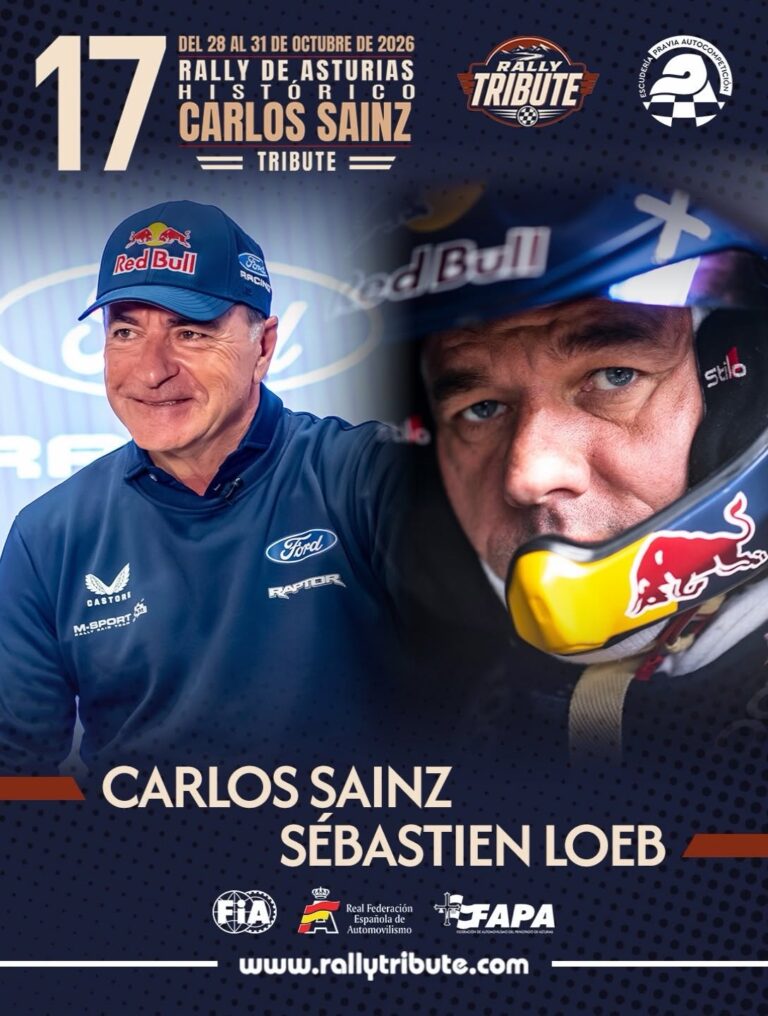
Loeb and Sainz Carry Their Old Conversation into Asturias
Sébastien Loeb and Carlos Sainz have arrived in Asturias with different cars and the same instinct for detail. Friday’s provisional order put Loeb and Isabelle Galmiche ahead of Sainz and Luis Moya by 24.9 seconds. Six Saturday stages now stand between the two crews and the finish of a rally built around memory, friendship and very current competition.
ViPeople Editorial DeskPublished 10 min read
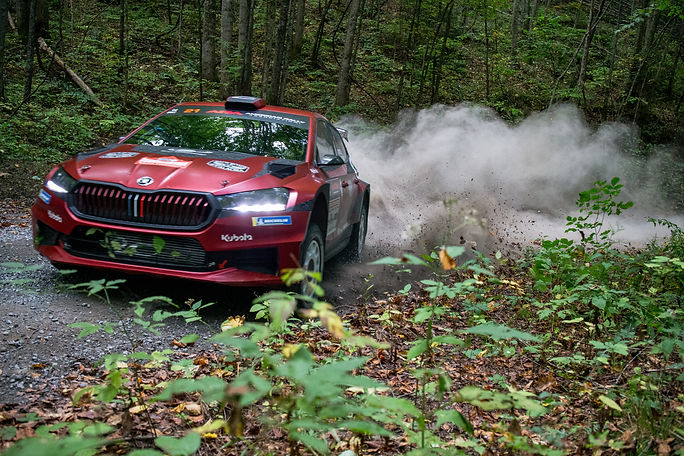
Photograph: Rally de Asturias Histórico
Audio articleListen to this storySerena (Enhanced) · English UK
Carlos Sainz came to Asturias for a tribute. Sébastien Loeb brought a Peugeot 306 Maxi and the familiar appetite for a stopwatch. By Friday evening, the Frenchman and Isabelle Galmiche led Sainz and Luis Moya by 24.9 seconds. The 17th Rally de Asturias Histórico had found its competitive shape, even with the final Friday stage cancelled in fog.
The Rally de Asturias Histórico brought Carlos Sainz and Sébastien Loeb together for the 2026 Carlos Sainz Tribute.Photograph: Rally de Asturias Histórico
The weekend carries two stories that fit together naturally. One belongs to Sainz, whose career has made him a familiar name across Spanish motorsport for decades. The other belongs to a rally that asks every crew to treat its roads with care and its timing with seriousness. The public tribute brought the people and cars together. Once the helmets were fastened, the classification began to speak for itself.
Sainz shares the Ford Puma Rally1 with Moya, the co-driver beside him through some of his most celebrated years. Loeb is paired with Galmiche, a proven voice in his more recent rally programme. These are partnerships built around pace notes, trust and quick decisions. The names on the door matter to the crowd. Inside the car, the work remains precise and immediate.
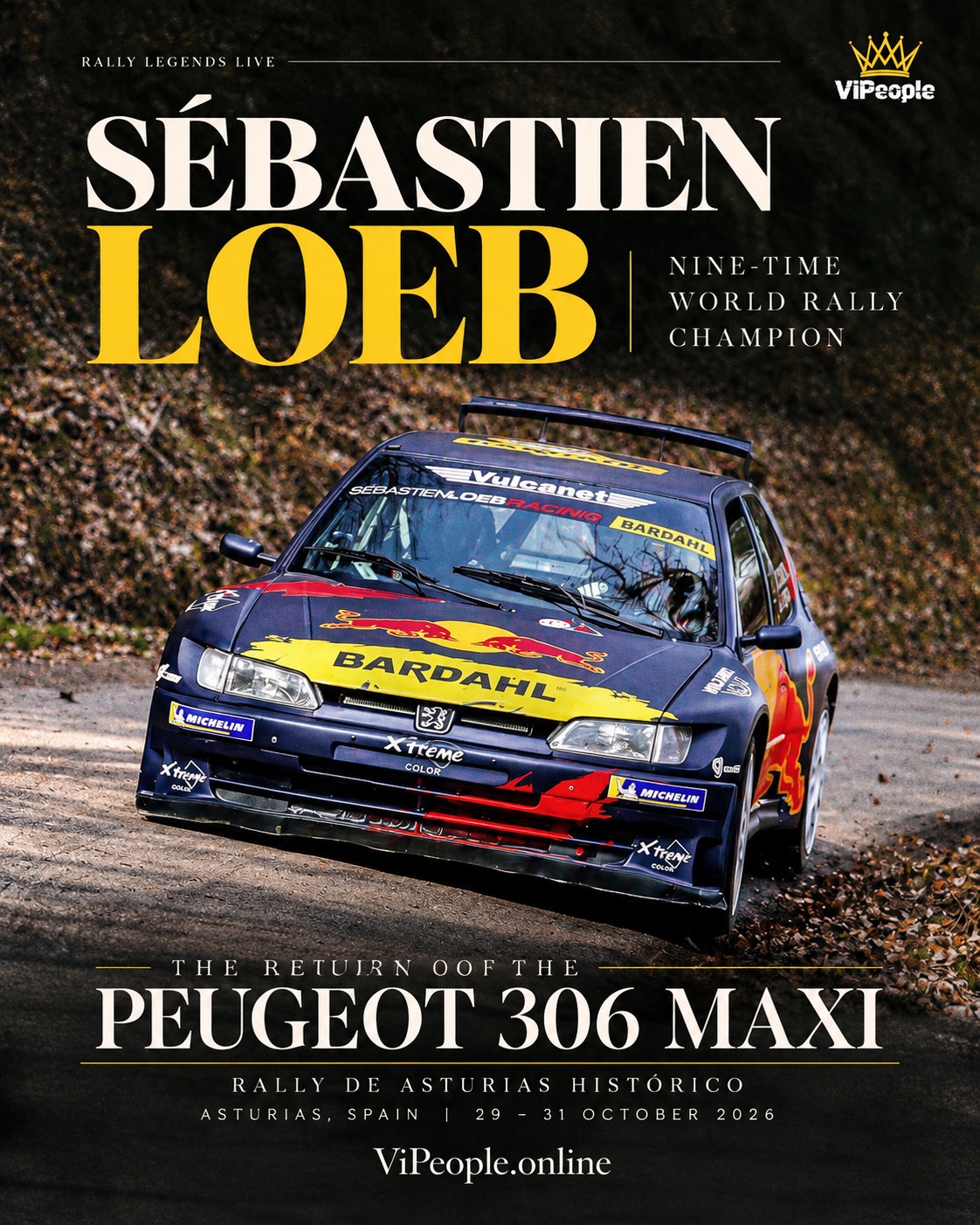
ViPeople-supplied illustrative artwork of Sébastien Loeb in the Peugeot 306 Maxi. It is an illustration, not a photograph from the 2026 rally.Photograph: ViPeople supplied illustrative artwork
A tribute with a live classification
The opening ceremony gave the rally its reason for gathering. The timed stages gave it direction. Loeb and Galmiche finished Friday at the top of the provisional order, with Sainz and Moya second and François Delecour with Gordon Noble third. Rui and Paula Madeira completed the provisional top four. The final Friday test was cancelled because fog reduced visibility, leaving the crews to carry their positions into Saturday.
A cancellation changes the distance available to recover time, though it does not change the demands placed on the event. Rally organisers have to make decisions around crews, marshals, spectators and public roads. When visibility falls, a stage can no longer be judged only by the sporting opportunity it offers. The safe choice is part of the result, even when fans would rather see another run.
The 24.9 second gap gives Saturday a clear question. Sainz and Moya need to find time across six stages. Loeb and Galmiche need to protect their advantage while continuing to drive at a pace that suits the road. Delecour and Noble remain close enough to keep the leading group in view. The classification is provisional, and a full day still lies ahead.
ViPeople-supplied illustrative artwork of Sébastien Loeb in the Peugeot 306 Maxi. It is an illustration, not a photograph from the 2026 rally.Photograph: ViPeople supplied illustrative artwork
The Peugeot 306 Maxi and Ford Puma Rally1 belong to different chapters of rally engineering. Loeb’s Peugeot is a front-wheel-drive kit car from the pre-2000 era represented in the event’s historic classification. Sainz’s Puma is a modern Rally1 machine, built around the hybrid generation that has defined the top level of the WRC in recent seasons. Their overall times can be compared on the same road, while the machinery asks each crew to use its strengths in different ways.
That difference helps explain why the tribute has such a strong sporting pull. A historic car asks its driver to carry speed with a different balance and a different set of limits. A contemporary Rally1 car brings another level of traction, braking and control. The stopwatch compresses those differences into one number. The stages make them visible again, corner by corner, as each crew searches for the pace that suits its car.
The crews also carry the names of people who have spent years learning how to work together. Moya’s partnership with Sainz is part of Spanish rally history. Galmiche’s recent work with Loeb has given the Frenchman a trusted co-driver for his return to selected rally events. Pace notes are private language spoken in public at speed. Every call has to arrive early enough to be useful and clearly enough to leave the driver free to act.
Two cars, two different ways to find speed
The Peugeot 306 Maxi and Ford Puma Rally1 give the weekend its most immediate visual contrast. The Peugeot belongs to the kit car era, when a compact, front-wheel-drive machine could use low weight, a wide track and precise momentum to make its case on the right road. Its naturally aspirated engine gives the car a distinct character. Its pace depends on carrying speed cleanly through the corner and asking the front tyres to do their work without wasting a metre.
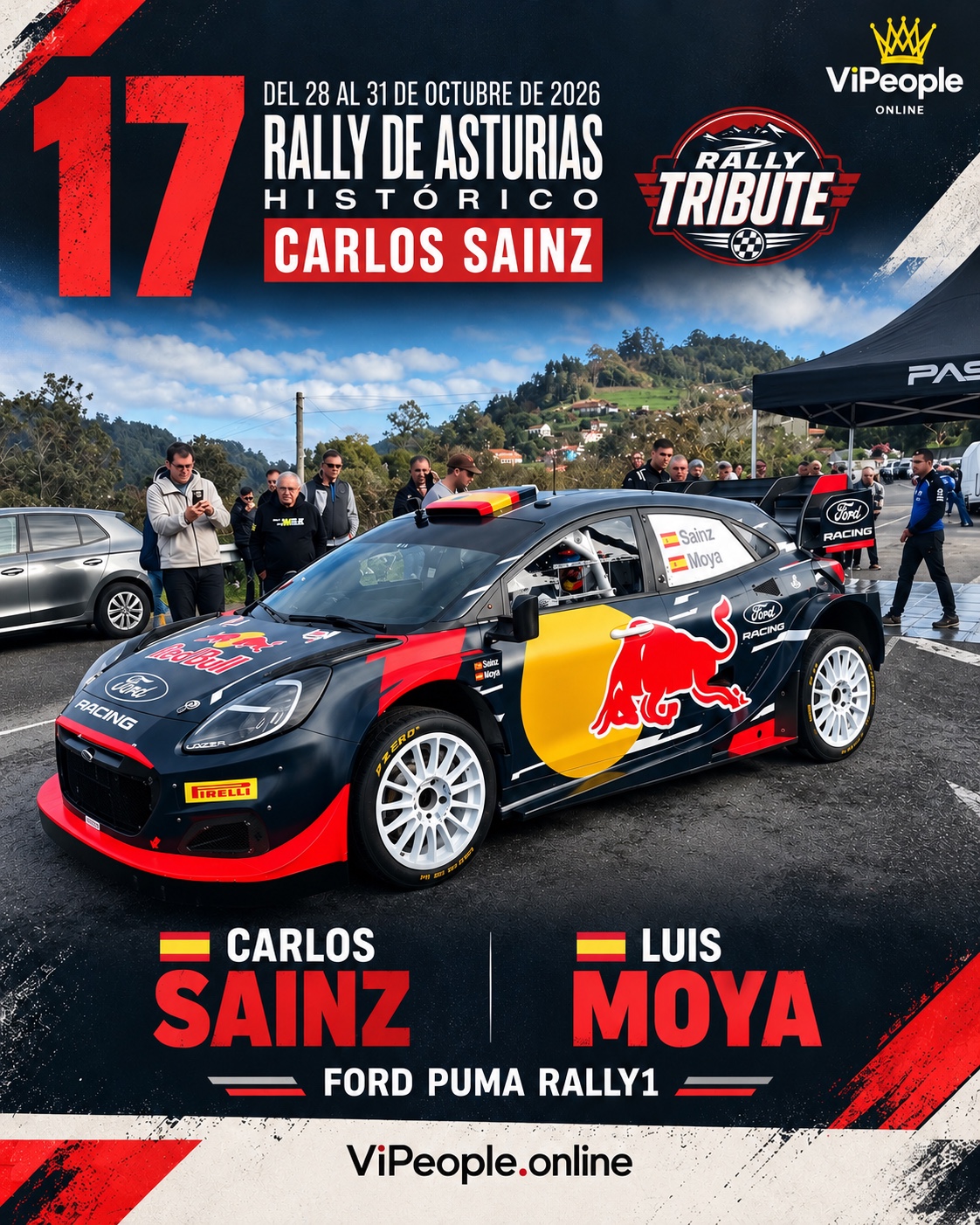
The Puma was designed for the modern Rally1 regulations. It is larger, four-wheel drive and built around the stability and traction required by a current top-level rally car. The hybrid system used in earlier Rally1 seasons has been removed under the 2025 rules, though the car retains its advanced suspension, sequential transmission and competition-focused structure. The two machines do not offer a laboratory comparison. They make the same roads interesting in different ways.
That contrast helps explain why this is more than a meeting of famous names. The drivers have to adapt to different responses from the car and different ways of building speed. A 306 Maxi rewards momentum. A Rally1 car gives its crew another set of tools, including four-wheel-drive traction and a broader ability to put power down. The timer measures the outcome, while the road supplies the conditions.
ViPeople-supplied illustrative artwork of Carlos Sainz and Luis Moya with a Ford Puma Rally1. The artwork is not event photography.Photograph: ViPeople supplied illustrative artwork
The Saturday itinerary gives the rally six stages, with the first loop beginning at Agones at 11:39 local time. Pravia follows at 12:20 and Salas at 13:13. The crews return to the same three tests in the afternoon, beginning at 16:35, with the final Salas run scheduled for 18:09 and the finish park due at 18:52. Repeated roads create a useful comparison, though the second pass is never a simple replay.
A first run leaves more than a time on the board. Drivers learn where the surface is polished, where a crest hides the next turn and how the car responds when the road tightens. A second pass asks them to use that information without assuming conditions have stayed still. Spectators, dust, changing light and the accumulated wear of a stage can all alter the task. The schedule compresses a large amount of judgement into one afternoon.
For the leaders, the arithmetic is clear and the driving remains complicated. Sainz and Moya can attack across six opportunities, but each faster split has to be weighed against the risk of losing the rally in one moment. Loeb and Galmiche can manage the 24.9 second lead, yet a conservative rhythm still has to be quick enough to keep rivals from finding a way back. A provisional gap is information. The next stage decides what it is worth.
Saturday asks the crews to read the road twice
The Saturday itinerary lists Agones, Pravia and Salas, each run twice. The first loop begins at 11:39, 12:20 and 13:13 local time. After regrouping and service, the crews return at 16:35, 17:16 and 18:09. The cars are expected into the final park in Pravia at about 18:52. Those times describe a compact programme in which the same stretch of road can ask a different question on its second pass.
A recce gives a crew its first map in the mind. The opening run supplies information that no pace note can fully predict: where loose material has gathered, how the car moves under braking and whether the line the driver expected is still the quickest one. The second pass brings that fresh knowledge together with a surface already marked by the earlier field. The notes have to stay clear as new observations arrive.
For Sainz and Moya, Saturday is a chance to translate a homecoming into a result. For Loeb and Galmiche, the lead is an opportunity that still has to be managed stage by stage. The crews share an event, not a script. One may gain time in a section that suits its car. Another may find a safer rhythm and recover later. The road gives no guarantee that Friday’s order will hold.
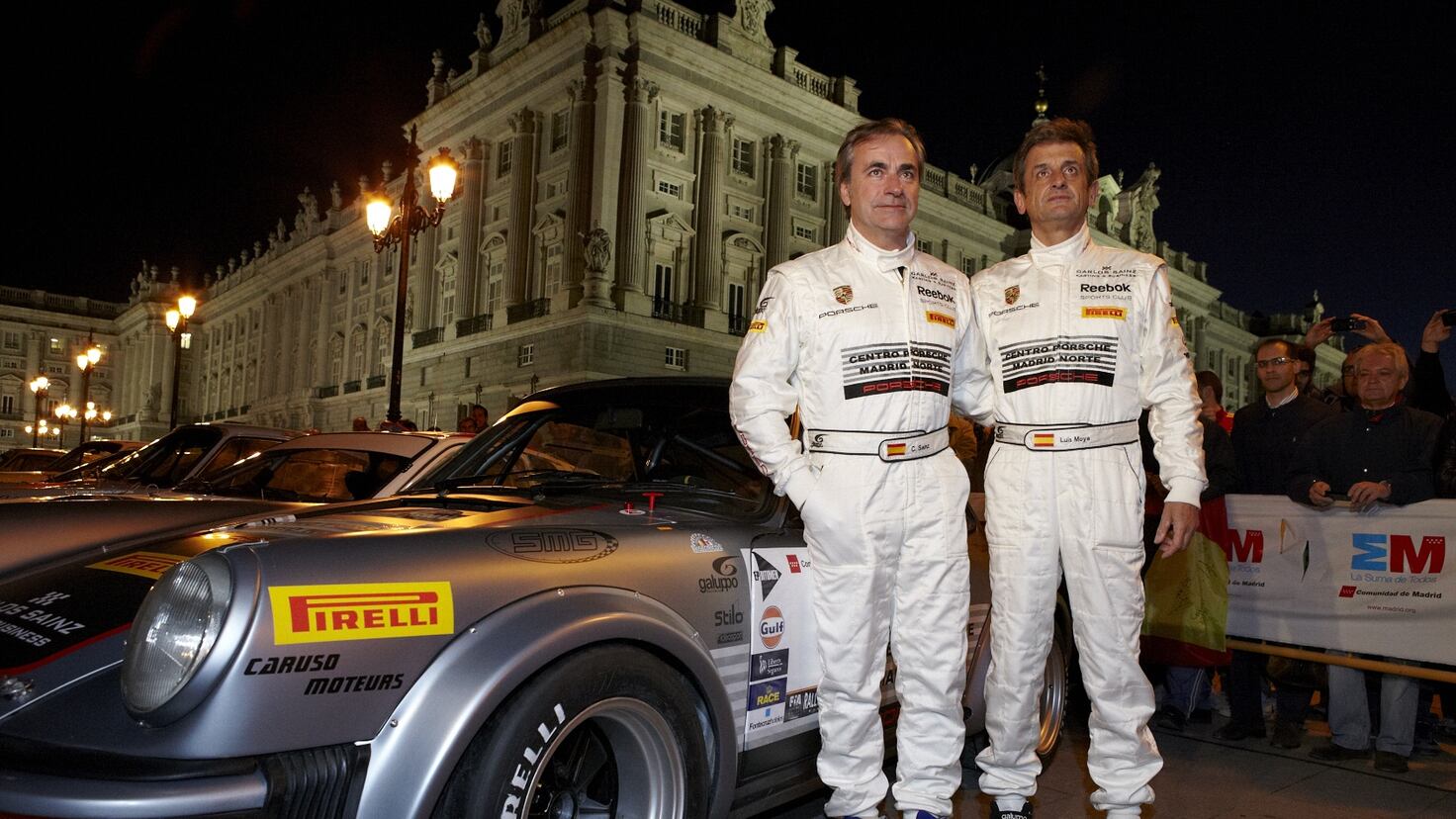
Carlos Sainz and Luis Moya in an earlier rally appearance. This archive photograph belongs to their shared competition history, not the 2026 Asturias stages.Photograph: AS archive
The meaning of a rally changes when the lights go out
Sainz’s tribute is strongest when the competition remains real. Fans can remember his world titles, his partnership with Moya and the years he spent at the front of international rallying. They can also watch him learn a current Rally1 car on stages that demand immediate precision. Loeb’s presence adds another chapter to a rivalry that became friendship, with both men still willing to measure themselves against a clock.
The crowd sees the cars pass in seconds. The crews experience the whole day as a sequence of choices: braking later or keeping margin, carrying speed or protecting the tyres, changing the plan after a stage has been cancelled. A rally is legible from the roadside in flashes. Its deeper rhythm sits in the conversations between the stages and the adjustments made before the next start.
Friday’s provisional result has made Saturday compelling without deciding it. The tribute gives the weekend its emotional centre. The six remaining tests give it a sporting one. When the cars reach the final park, the classification will tell us who managed the roads best. The applause will belong to everyone who made the meeting possible, including the crews who treated a celebration as a proper rally.
The event holds history and competition in the same frame
Historic rallying can turn a familiar name into a working question. The Peugeot 306 Maxi carries a period of rally competition in its shape and sound. The Ford Puma Rally1 brings the current top class into the same conversation. Fans can recognise the cars before they know the split times. The drivers still have to make them work through the stages, with the result decided by the clock and the road.
Asturias gives that meeting a setting with a strong rally identity. The event’s roads and towns are part of the experience, with the itinerary moving through Agones, Pravia and Salas on Saturday. The service and finish areas bring the crews back into public view between the timed tests. That rhythm lets a tribute stay connected to the people who came to see it, while keeping the rally’s sporting rules in place.
The cancellation of Friday’s final test remains part of the account because it shaped the margin carried into Saturday. The decision was made in fog, with visibility affecting what the organisers could safely ask of crews and marshals. It reduced the available competitive distance and left the remaining stages with more influence over the result. A rally is measured by its completed tests, and the itinerary can change when conditions demand it.
When the crews enter the finish park, the event will have brought several generations of rally machinery and competition into one classification. The provisional order gives Loeb and Galmiche the advantage, with Sainz and Moya close enough to keep the contest alive. The meaning of the tribute is already clear in the people and cars it assembled. Saturday’s times will decide the sporting ending.
The timing sheet shows different generations sharing a stage, yet the story starts in the service area, where each crew prepares around its own car. A 306 Maxi and a Puma Rally1 ask for different checks and different expectations. One crew is working with a historic front-wheel-drive machine. The other is bringing a current four-wheel-drive Rally1 car to a Spanish historic event. Their crews arrive with distinct engineering contexts, then meet on the same timed road.
For a driver, a familiar rally can still feel new when the car changes. The pace notes need to suit the machine’s response, and the driver has to trust what the tyres can do on that particular surface. A co-driver reads information before the car reaches each hazard. There is little space for a long correction once the stage is under way. This shared discipline links the crews even as the cars separate them.
The crowd’s affection for the names can make the event feel like a reunion. The classification keeps it honest. Loeb and Galmiche have a lead to defend. Sainz and Moya have a gap to reduce. Delecour and Noble sit in the provisional top three, with the Madeira crew fourth. A tribute is strongest when the people being honoured are given room to compete on their own terms, and that is what the order now reflects.
Comments0
Join the ViPeople conversationSign in with Google to comment, like and save stories.Continue with Google