
WRC 2029 Could Open the Door to V6s, V8s, Hydrogen and Electric Power
The FIA is preparing a more flexible technical future for the World Rally Championship, with manufacturers potentially free to choose the powertrain that best represents their technology from 2029.
Photograph: Official manufacturer / championship media- Proposed change
- Open powertrain choice from 2029
- Current direction
- WRC27 spaceframe car with Rally2-based technology
- Potential options
- Internal combustion, hybrid, hydrogen or full electric
- Reference category
- World Rally-Raid Championship
- Power control idea
- Torque measurement at the wheels
The next great WRC argument may begin with a question that would have sounded slightly mad a few years ago: what kind of engine should a top-level rally car have? From 2029, the answer could come from the manufacturer itself, with the FIA considering a more open powertrain framework that could welcome V6s, V8s, hybrid systems, hydrogen engines and full electric cars.
The idea emerged in a DirtFish report after comments from FIA deputy president Malcolm Wilson and FIA technical director Xavier Mestelan Pinon. Their message was straightforward. The World Rally Championship needs a technical future that can speak to the companies building the next generation of road cars, while preserving the speed, sound and danger that give rallying its identity.
This remains a plan under discussion, not a finished 2029 rulebook. The direction matters because the FIA has already designed the next WRC platform with room for change. The WRC27 regulations arrive in 2027 around a cost-controlled spaceframe chassis and Rally2-based components, with a long homologation cycle intended to give manufacturers and teams a stable foundation. Powertrain freedom could become the next large step in that process.
The rulebook is being designed before the engine is chosen
The first part of the story is the WRC27 car. The FIA’s approved technical direction replaces the current Rally1 formula with a more affordable spaceframe machine using Rally2-level engines, transmissions and brakes. The car is expected to run on fully sustainable fuel at the beginning of the cycle, with the regulations written to accommodate later technology changes.
That longer view gives the championship something it has lacked during several difficult regulatory conversations: a platform that can survive beyond one manufacturer decision. A ten-year homologation cycle gives constructors time to recover investment, develop customer programmes and plan a proper relationship between competition engineering and road-car technology.
The financial argument is just as important. The WRC27 car has been designed around a major reduction in cost compared with the outgoing Rally1 era. A cheaper, safer and more adaptable base could make the top level easier to enter, while an open powertrain rule could give manufacturers a reason to join for technical reasons as well as marketing reasons.
Why Malcolm Wilson keeps pointing towards cross country
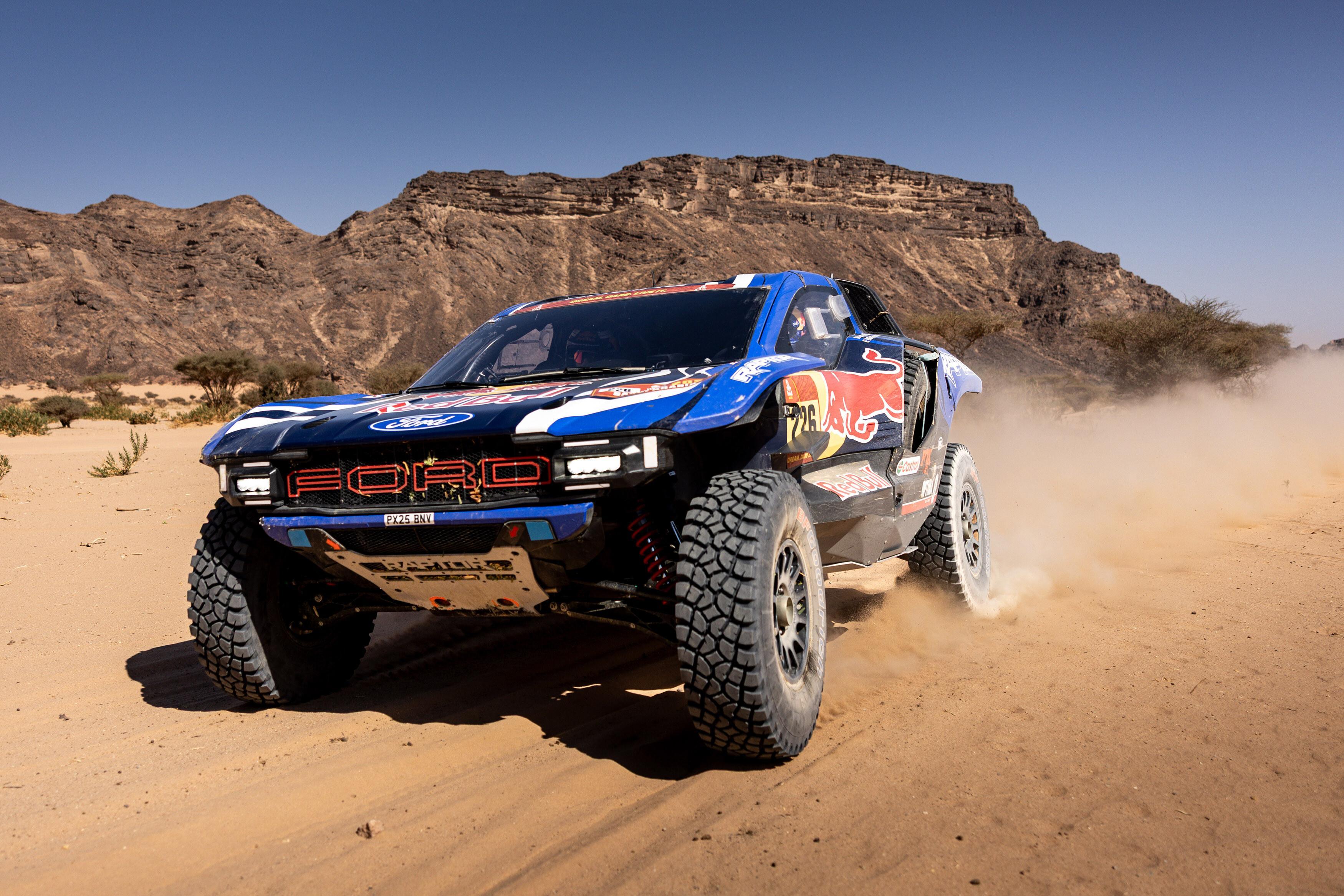
Wilson’s most useful comparison comes from the FIA World Rally-Raid Championship. Cross country rallying already contains several different answers to the engine question. Diesel power, turbocharged petrol engines, V6s and V8s compete within the same broad category, with a torque meter helping the organisers manage the performance window.
The principle is elegant. The measurement focuses on the power delivered to the driven wheels, which gives the regulator a way to compare different types of engine. If a car exceeds the permitted level, the sporting system can issue an alert and apply a time penalty. The solution does not erase the mechanical differences between a V8 Ford Raptor and the twin-turbo V6 machinery used by rival rally-raid manufacturers. It gives those differences a controlled place inside the competition.
That is the model Wilson believes could help the WRC attract manufacturers again. The championship could become a meeting place for different engineering philosophies, with each company bringing a powertrain that carries a genuine connection to its wider technical ambitions.
Hydrogen gives rallying a familiar sound with a different fuel
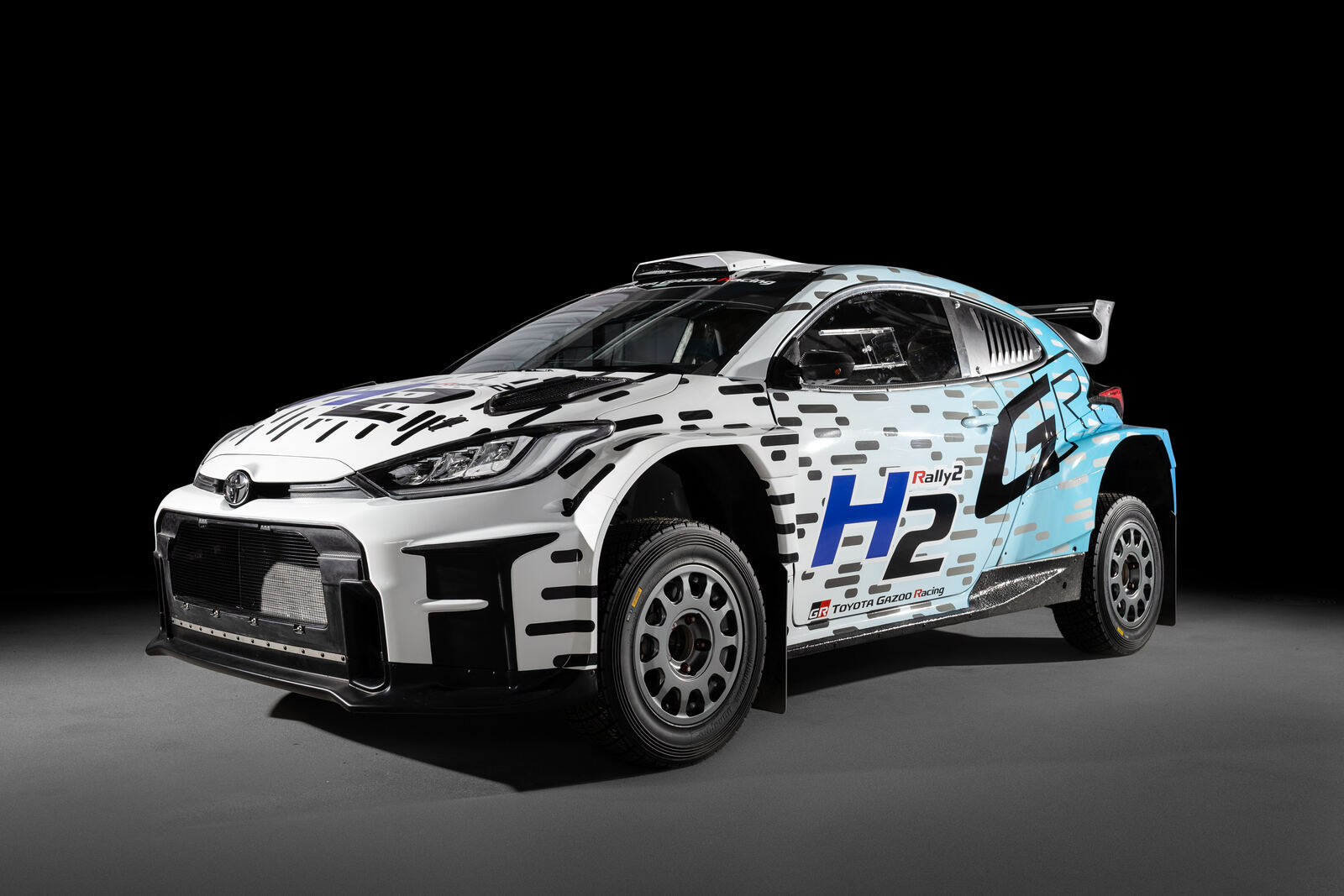
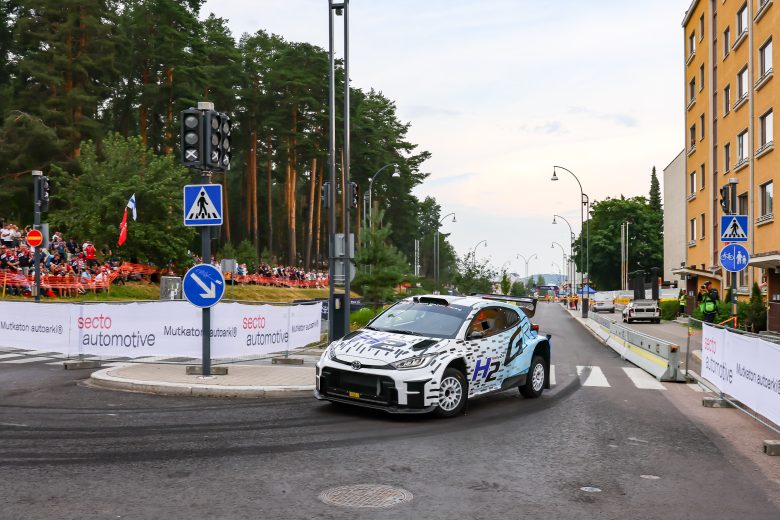
Toyota has already placed one possible answer in front of the rally audience. The GR Yaris Rally2 H2 Concept uses a compressed hydrogen-fuelled internal combustion engine in a Rally2-based chassis. Toyota has demonstrated hydrogen technology in Japan’s Super Taikyu series, taken the GR Yaris H2 to a WRC demonstration in Belgium and run the Rally2 H2 Concept at Rally Finland and Monte Carlo.
The attraction is easy to understand from the side of a forest stage. The car keeps the noise, the throttle response and the physical character associated with a combustion engine, while the running emissions are close to zero. Hydrogen brings its own challenges around production, storage, transport and refuelling, yet the rally service park already has the structure needed to make fuel logistics part of the event.
Hydrogen also speaks to manufacturers who want to keep developing an engine with pistons, combustion and heat management. A top-level rally programme could give that work a public laboratory, especially in markets where battery electric cars are only one part of a much larger energy conversation.
Full electric power is technically possible
Mestelan Pinon’s comments give the electric option more substance than a distant thought experiment. His view is that a full EV WRC car producing around 300 horsepower could complete a 30 or 35 kilometre stage, then cover a substantial road section, with a battery of roughly 40 kilowatt-hours. The important requirement would be charging infrastructure between stages.
Rallying creates a fascinating energy pattern for an electric car. A stage contains intense bursts of acceleration, braking and cornering, followed by a controlled road section. The car spends its competitive life in short, demanding efforts. That rhythm can suit electric power in a way that a long motorway race would struggle to match.
The service park would change. Teams would need high-voltage specialists, charging plans and clear procedures for damaged batteries. Organisers would have to decide where charging units sit, how many cars can use them at once and how the timetable protects the sporting contest. A rally route designed around petrol refuelling cannot simply receive an electric car and carry on as usual.
The great engineering challenge will be equalisation
Opening the door to several powertrains creates an enormous technical task. A battery electric car delivers torque in a different way from a turbocharged engine. A hydrogen combustion engine carries different mass and packaging demands. A hybrid system adds electrical power, control software and energy recovery. Even two petrol engines with similar outputs can behave differently across a long gravel stage.
The regulator therefore needs more than a headline horsepower figure. Weight, torque, energy use, fuel flow, boost, battery deployment and thermal limits all shape the result. The torque-meter idea offers one possible control point, although rallying’s forests and road sections create a more complicated environment than a closed circuit or a rally-raid bivouac.
A good rulebook will have to protect the driver’s role. The cars can carry different technologies while still offering similar opportunities for commitment, precision and bravery. The spectacle lives in the decisions made at speed, in the way a crew manages grip and in the sound of a car arriving at a corner with the road already disappearing ahead.
A wider door for manufacturers
The strongest argument for this direction is participation. Manufacturers understand that a rally championship can offer a powerful technical and emotional connection with customers. They also understand that a single fixed formula can become expensive when it asks every company to develop the same kind of powertrain, regardless of the direction of its road-car business.
A more open WRC could allow Toyota to continue exploring hydrogen, another manufacturer to develop a compact hybrid, an electric specialist to build a battery car and a traditional performance brand to arrive with a sustainable-fuel combustion engine. The cars would still need to live inside a shared safety and performance structure, though the identity of each machine could become more meaningful.
For independent teams, the promise comes with a warning. More technical variety can mean more specialist equipment, more complex servicing and a steeper learning curve. The WRC27 cost cap and common chassis therefore remain essential. A private team needs to understand the car, prepare it properly and keep it running across a rally weekend without carrying a factory-sized engineering department.
The sound of the future will be chosen carefully
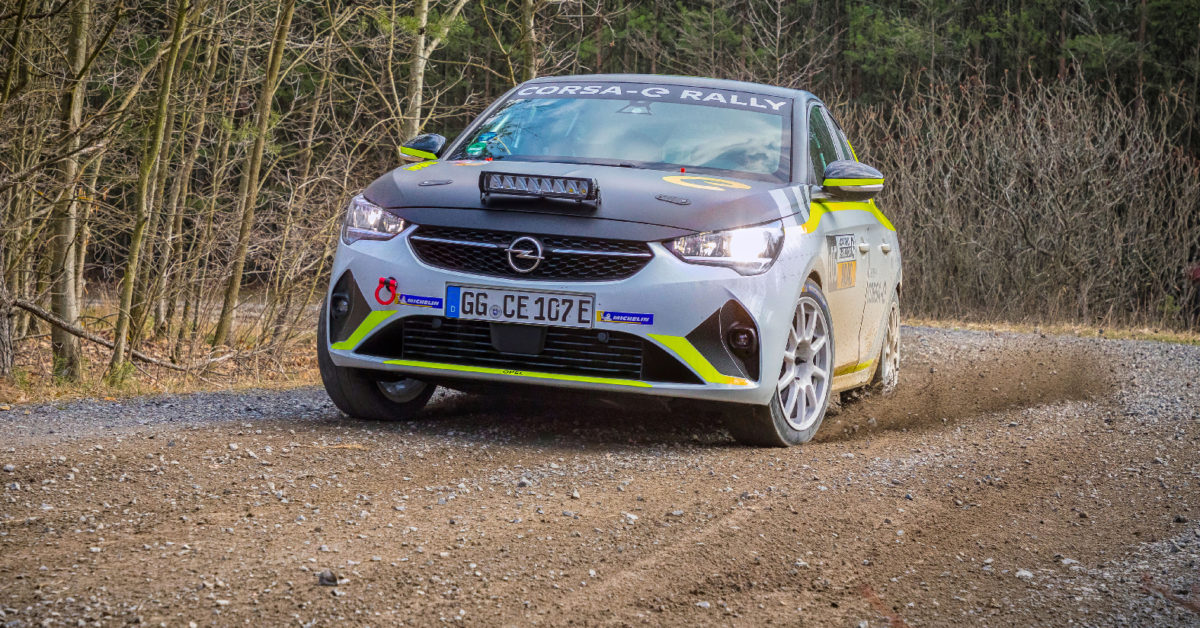
Rally fans are unusually sensitive to sound because the car often reaches them before it appears. A change in pitch tells an experienced spectator whether the engine is loaded, whether the driver has lifted and how close the car may be. Electric rallying introduces a quieter mechanical world, which is why Opel developed an external sound system for its Corsa Rally Electric and why the FIA continues to discuss the spectator experience alongside the technical solution.
Hydrogen combustion offers the most familiar soundtrack, while hybrid systems could preserve the drama through a mixture of engine noise and electric deployment. Full electric power would ask the sport to create a different kind of theatre. The silence between the tyres and the gravel could become part of the attraction, provided the safety and communication systems are designed properly.
2029 is a direction, not a finished destination
The immediate future remains the WRC27 era, with the new car and its Rally2-based technology forming the common ground. The possible 2029 opening gives the FIA time to study the data, speak to manufacturers and work out how a flexible powertrain structure can operate across every kind of rally on the calendar.
That work will decide whether the idea becomes a genuine new chapter or remains an attractive sentence in a technical presentation. The ambition is clear. Give manufacturers room to bring relevant technology. Keep costs under control. Protect safety. Preserve the speed and character that make the World Rally Championship feel like the most intense road test in the world.
For now, the most exciting part is the range of possibilities. A WRC service park with a hydrogen Toyota, a hybrid challenger, an electric newcomer and a screaming sustainable-fuel V8 would look wonderfully strange. Rallying has always been at its best when the machines feel slightly impossible, and the FIA appears ready to give that imagination somewhere to go.