


WRC’s 2027 Map Opens Three New Doors
The 15-round schedule brings the championship back to the United States and Britain, adds a Rome-based Italian round and ushers in a new cost framework for the top class.
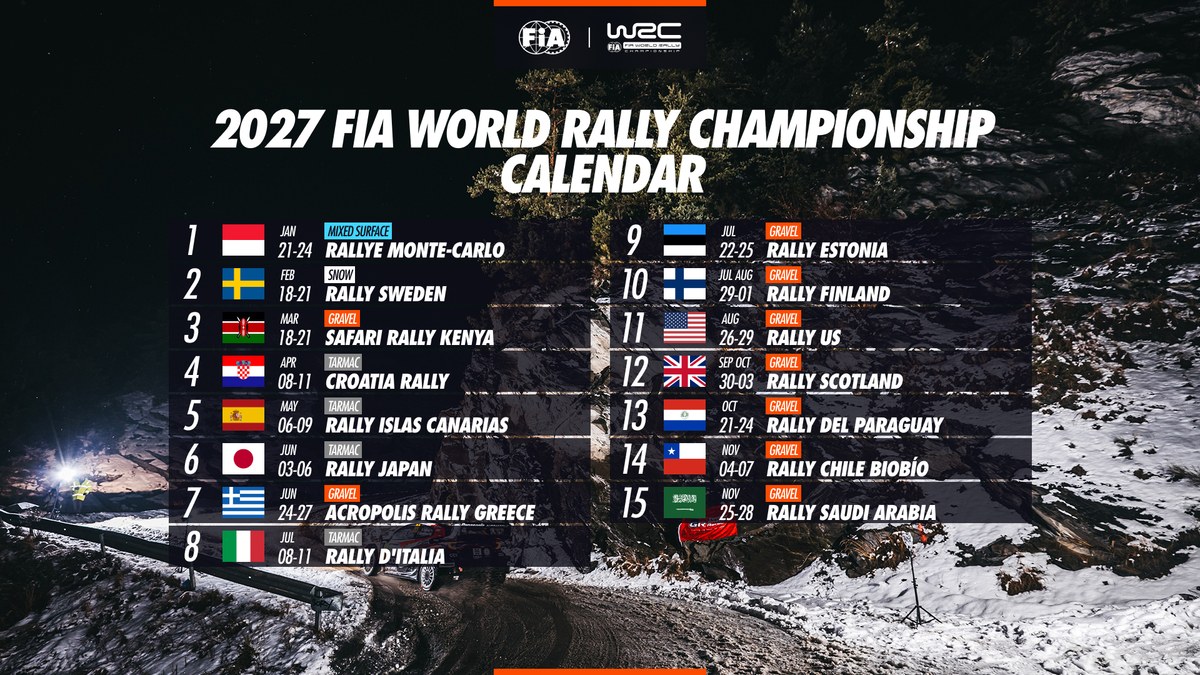
Photograph: FIA- Calendar
- 15 rounds, approved by the FIA World Motor Sport Council
- Rally d’Italia
- Rome and Lazio · tarmac · 8 to 11 July 2027
- Rally US
- 26 to 29 August 2027 · first United States round since 1988
- Rally Scotland
- Aberdeen base · 30 September to 3 October 2027
- WRC27 car price cap
- €345,000 for a ready-to-compete car in tarmac specification
The 2027 World Rally Championship map has three fresh marks on it. Rome will host the Italian round, the United States will return for the first time since 1988, and a world championship rally will come back to Britain after the gap since 2019. The places give the announcement its immediate pull. The deeper story is how the FIA is trying to make a wider calendar and a new generation of cars arrive together.
The FIA has confirmed 15 rounds, approved by the World Motor Sport Council. The season keeps the landmarks that have shaped rallying for decades and adds three events with different histories, audiences and routes into the championship. Each new date comes with a longer piece of work behind it: the local organising teams have spent months showing that an ambitious idea can be made into a safe, coherent world championship event.
Rome brings the championship onto a larger stage
Rally d’Italia will run from 8 to 11 July on tarmac stages across Lazio, with Rome as its high-profile setting. The event moves up from the European Rally Championship, where Rally di Roma Capitale has built a following since its debut in 2017. For the WRC, it puts a major Italian city beside the stage roads and gives the calendar a recognisable centre beyond the rally service park.
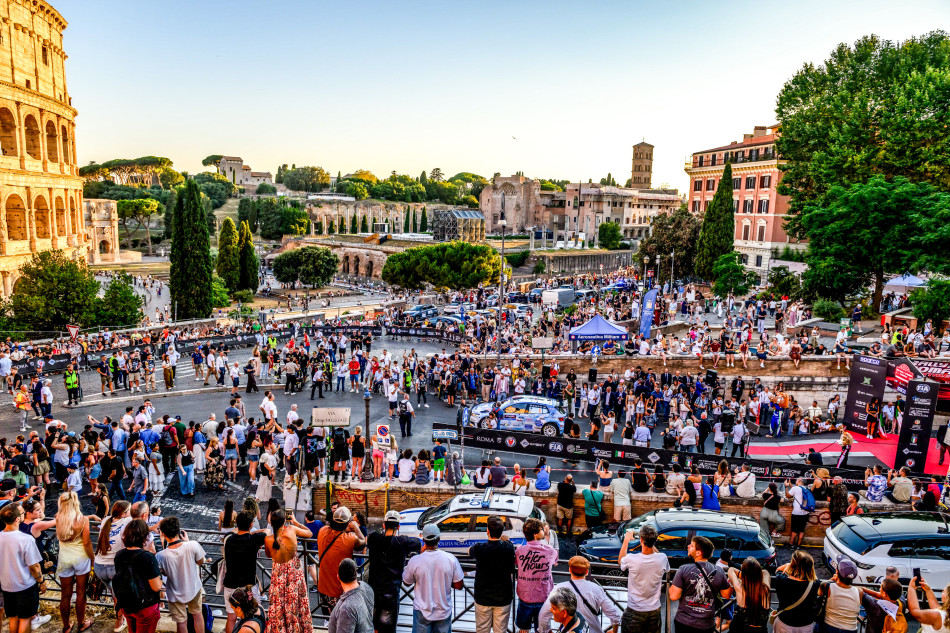
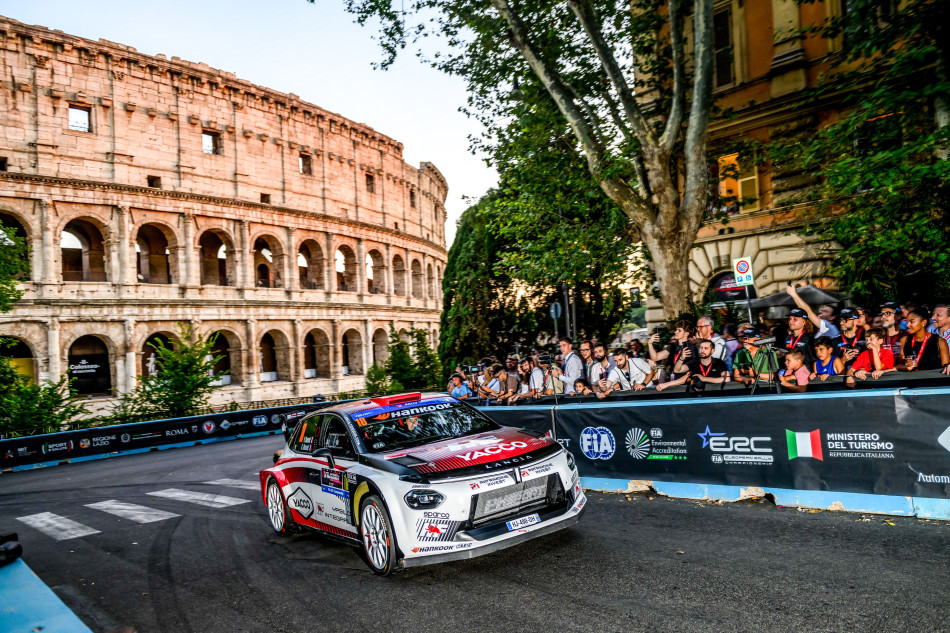
The 2026 candidate event showed how the setting might work. FIA delegates assessed sporting and safety arrangements during the ERC rally, including a special stage around the Colosseum and new locations in central Rome. Those details belong to the evaluation, not to a confirmed 2027 itinerary. The final route will have to make the city centre and the roads of Lazio feel like parts of one event, with the practical rhythm that crews and organisers need.
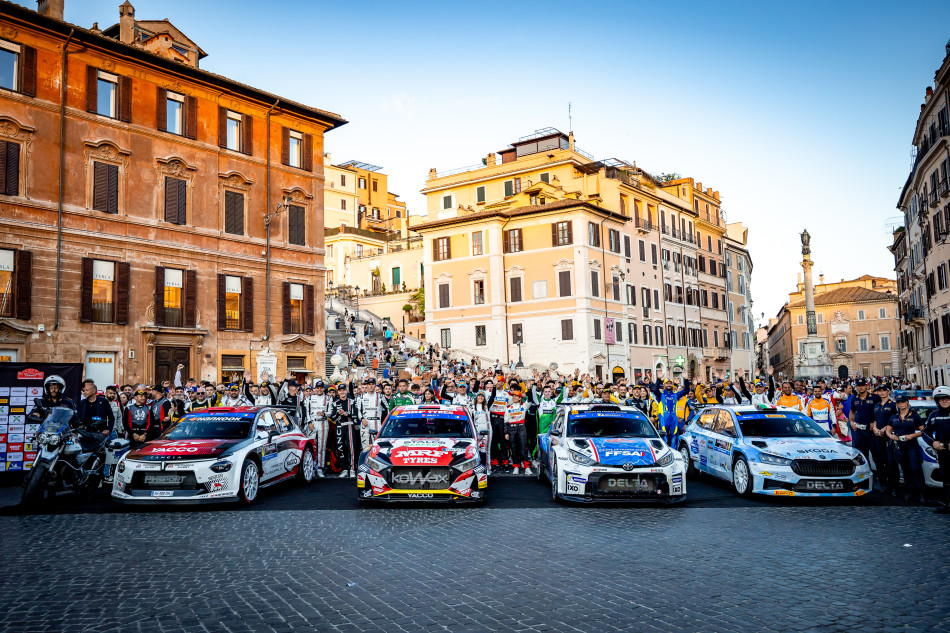
A city-centre stage carries obvious public visibility. Rallying still earns its character outside the postcard frame, where a co-driver’s notes have to make sense at speed and a crew has only one pass at each competitive road. The event will have to hold both ideas together: the welcome of a capital city and the concentration demanded by changing tarmac, junctions and pace-note detail.
America returns with a route still to be revealed
Rally US is scheduled for 26 to 29 August. The date ends a long absence from the world championship calendar. The last WRC round in the United States took place in 1988, before the championship’s modern global reach and before the country’s current rally community had grown into its present form.
The FIA’s seven-day candidate assessment ran from 11 to 17 June 2026. Delegates watched the Southern Ohio Forest Rally, then travelled to Tennessee and Kentucky to assess proposed stages, medical provision, service-park planning and ceremonial-start locations in Knoxville and Nashville. That work is the foundation for the confirmed event. The FIA has not published a final stage map in its calendar announcement, so the roads and towns that will shape the competitive route remain a story for another day.
The opportunity is unusually broad. The country gives the series a large automotive and media market, as well as a domestic rally scene with its own identity and devoted organisers. A visiting world championship can bring that local knowledge into view when the event feels rooted in its region and built around its crews, with a story larger than one headline. The challenge is the same one faced by every new round: create a rally that is memorable to follow and workable for the people delivering it.
Aberdeen gives Scotland a new rally address
Rally Scotland takes place from 30 September to 3 October, based in Aberdeen. Britain’s last WRC appearance was Wales Rally GB in 2019. The new event gives the championship a route back to the United Kingdom while placing Scotland’s forest roads at the heart of its own identity.
The candidate assessment centred on the 2026 Grampian Forest Rally around Banchory, with FIA delegates also reviewing proposed stages, the headquarters plan at P&J Live, possible service-park space and the ceremonial start. The FIA highlighted Aberdeen’s accommodation and airport connections as part of the operational picture. Those details are less glamorous than a flying finish, yet a rally depends on them every hour of the week.
The candidate roads gave the organisers a first chance to demonstrate the sporting character of the region. Grampian’s forest stages are fast and flowing, with the surface asking crews to read grip and commitment together. The confirmed WRC round will still need its own route and event plan. The early assessment showed the ingredients, while the final rally will turn them into a four-day sequence for competitors and spectators.
Fifteen rounds, one changing rhythm
The familiar sequence remains visible around the new destinations. Rallye Monte-Carlo opens the season in January, followed by Sweden and Safari Rally Kenya. Croatia, the Canary Islands and Japan form a run of tarmac events before Acropolis Rally Greece begins the European gravel stretch. Rally d’Italia takes the series to Rome in July, with Estonia and Finland then placing two fast gravel rallies together.
After Rally US and Scotland, the championship heads to South America for Paraguay and Chile, then closes with Rally Saudi Arabia from 25 to 28 November. The calendar links winter roads, snow, African heat, asphalt, fast northern gravel and long-haul travel across five continents. Its variety is part of the sport’s appeal, and a practical demand on the teams that must prepare one service operation for very different weeks.
The order matters because rallying is a travelling workshop. Cars are rebuilt between events, spare parts move with the team, and crews have to switch the way they read a road as the surface changes. A longer calendar touches every part of that work. It also gives event organisers more chances to bring local officials, volunteers and fans into an international championship. The measure of expansion will be the quality and continuity of those relationships after the launch year.
New rules set a second kind of invitation
The calendar arrives as the WRC prepares to introduce its WRC27 technical regulations. From 2027, manufacturers and independent tuners will both be able to design, homologate and compete with cars at the top level. The FIA has set a €345,000 ceiling for a ready-to-compete car in tarmac specification. That figure creates a clearer entry point for a vehicle. It does not cover the cost of running a team through a season of development, travel, people and repair work.
That distinction matters. A price cap can make the conversation about entry more concrete, while the championship still has to show that the wider programme is sustainable. Independent builders need a route to support, parts and competition. Manufacturers need to see that the calendar and rules reward long-term commitment. Rally fans will judge the result by the cars that actually appear, the variety of crews and the close competition that follows.
Ford has announced a full factory programme from 2028 and an all-new Rally1 car for 2029 under the new regulations. Its timeline underlines the transition around the first WRC27 season. The 2027 calendar begins the new era, while some of the manufacturers’ larger commitments will unfold over the seasons that follow.
A map can promise possibility in a single glance. The championship has now drawn a line through Rome, Knoxville’s candidate-event planning, Aberdeen and the familiar stages that continue to hold the season together. The work ahead is measured in roadbooks, service plans, marshals, cars and the spectators who choose a place beside the road. In 2027, the calendar will stop being an announcement and start becoming a lived route.