

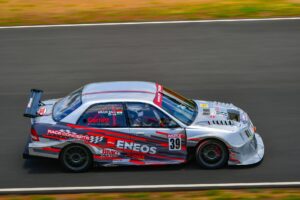
Joel Joseph and Race Concepts: The Workshop That Took Indian Racing Personally
From turbocharged Honda Citys to touring-car programmes, Race Concepts grew around a simple idea: the car has to be fast, but it also has to come back ready for the next session.
Created using advanced editorial technology. Reviewed and approved by ViPeople.
Photograph: Garrett Motion / Race Concepts- Founder
- Joel Joseph
- Base
- Bengaluru
- Speciality
- Circuit, drag and performance builds
- Known for
- Honda City VTEC development
- Circuit programme
- Indian Touring Car and national racing
Race Concepts became known through cars that were quick where it mattered most: braking zones, long races and the last lap of a hard weekend.
Founded by Joel Joseph in Bengaluru, the outfit built its reputation through a mixture of tuning, race preparation and driver development. Evo India has documented the range of that work, from a naturally aspirated Maruti Suzuki Zen and turbocharged Honda Citys to drag cars and a BMW E36 restomod.
A race engineer’s way of thinking
Joseph’s background is important because the workshop was never separated from the circuit. Race Concepts’ identity came from understanding what a modification does after the first lap, when temperatures move, tyres lose their freshness and a driver begins asking the car to do the same thing repeatedly.
That approach is visible in the Honda City VTEC builds that made the name famous. The goal was balanced, repeatable performance. That meant a usable engine, a close-ratio transmission, stronger braking and a chassis that could turn power into repeatable laps. That same thinking carried into circuit racing, where a quick qualifying time is only useful if the car can maintain its behaviour through the race.
Why Indian circuit racing needs this layer
India has drivers with speed and teams with ambition, but the space between a road car and a national race car is where many programmes lose momentum. A workshop that can build, test, repair and explain the car gives a driver a way to improve instead of merely replacing parts after every problem.
Race Concepts belongs in that conversation. Its legacy lives in the idea that Indian circuit racing improves when engineering, preparation and driving are treated as one job.
The workshop is part of the lap
A performance workshop becomes memorable when its cars have a life away from the hoist. Race Concepts found that life through testing, competition and the repeated questions asked by drivers who wanted a car to respond more clearly. A road car can hide a compromise with comfort or electronic assistance. A race car reveals it on every corner, especially when the same line is taken lap after lap and the tyres begin to fade.
The Honda City programmes made those lessons visible. Power had to arrive in a way the front tyres could use. Braking had to remain stable after the heat rose. The suspension needed to give the driver information without making the car nervous. Those decisions are connected, and a workshop that understands the connection can spend its time solving the real problem instead of chasing a spectacular number.
That is where Joel Joseph’s work has value beyond the individual build. It gives Indian drivers a place to understand their cars and gives young technicians a place to see how competition engineering is done. Every properly prepared car raises the level of the next event. Race Concepts has helped make that improvement feel practical, immediate and achievable.
The car tells the truth on a circuit
A workshop can make a dyno number look impressive, though a circuit asks harder questions. Does the car brake in the same place after several laps? Can the front tyres use the power? Does the suspension give enough information for a driver to commit without fear? Race Concepts built its reputation by answering those questions through use.
Joel Joseph’s work matters because it keeps the engineering close to the driver. The feedback from the seat can guide the next change, and the next change can be tested against a real lap. That conversation turns parts into a coherent car.
The wider benefit is cultural. Young technicians see a standard, young drivers find a place to learn and Indian circuit racing gains more cars that are prepared with care. The workshop becomes part of the championship’s education.