
Hyundai Bayon Arrives in India at an Introductory ₹9.99 Lakh
Hyundai has launched the Bayon with a 1.5 litre petrol engine, manual and IVT transmissions, and a cabin shaped around connected technology. Its introductory starting price is ₹9,99,900, bringing a new choice to India’s mid size SUV market.
Photograph: Hyundai Motor India- Introductory starting price
- ₹9,99,900 ex showroom
- Engine
- 1.5 litre MPi petrol
- Power
- 115 PS
- Torque
- 143.8 Nm
- Transmissions
- Six speed manual or IVT
- Displays
- 12.3 inch instrument and infotainment screens
- Boot space
- 505 litres
- Safety
- Six airbags and Level 2 Pro ADAS
The Hyundai Bayon has moved from teaser to showroom conversation. Its India launch brings an introductory starting price of ₹9,99,900 and a place beside the Creta in Hyundai’s mid size SUV line up. The first impression is a new face and a connected cabin. The character underneath is a familiar 1.5 litre petrol engine, offered with a manual or an IVT for buyers who want the same broad brief to suit two different kinds of daily driving.
A simple powertrain with two ways to drive it
The Bayon uses Hyundai’s 1.5 litre MPi petrol engine, producing 115 PS and 144 Nm. Buyers can pair it with a six speed manual or an Intelligent Variable Transmission. That choice gives the car two clear everyday moods. The manual leaves the driver closely involved in the engine’s response. The IVT is aimed at the stop and start rhythm of city travel, where a smooth pull away can matter as much as the figures on the spec sheet.
The engine is a known Hyundai unit. The company says it has sold more than six lakh vehicles fitted with this four cylinder 1.5 litre MPi powertrain since 2020. That history gives buyers a familiar starting point as the Bayon enters a new segment for the brand. Its output suits daily travel and longer journeys. The choice of transmission does much of the work in shaping the experience.
The iVT version gets paddle shifters, three drive modes and Dash Boost Mode, which Hyundai says sharpens response for an overtake. Sporty Drive Tech is another part of the transmission’s response package. These details give the automatic more character than a simple convenience choice. The manual keeps the familiar rhythm of changing gears. The iVT adds small ways to ask the powertrain for a different mood.
The cabin makes technology part of the first conversation
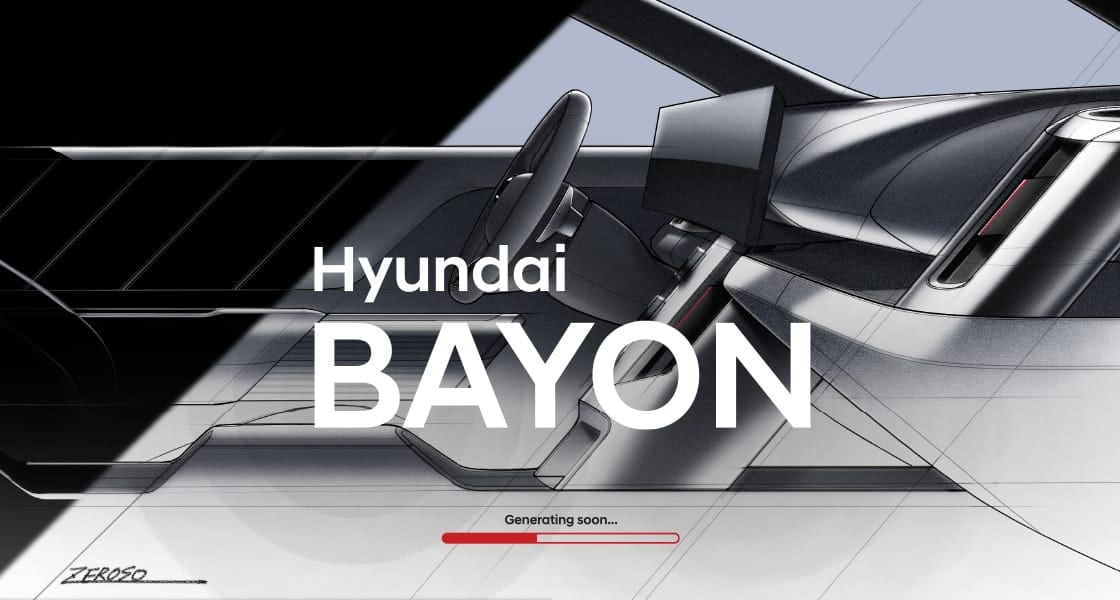
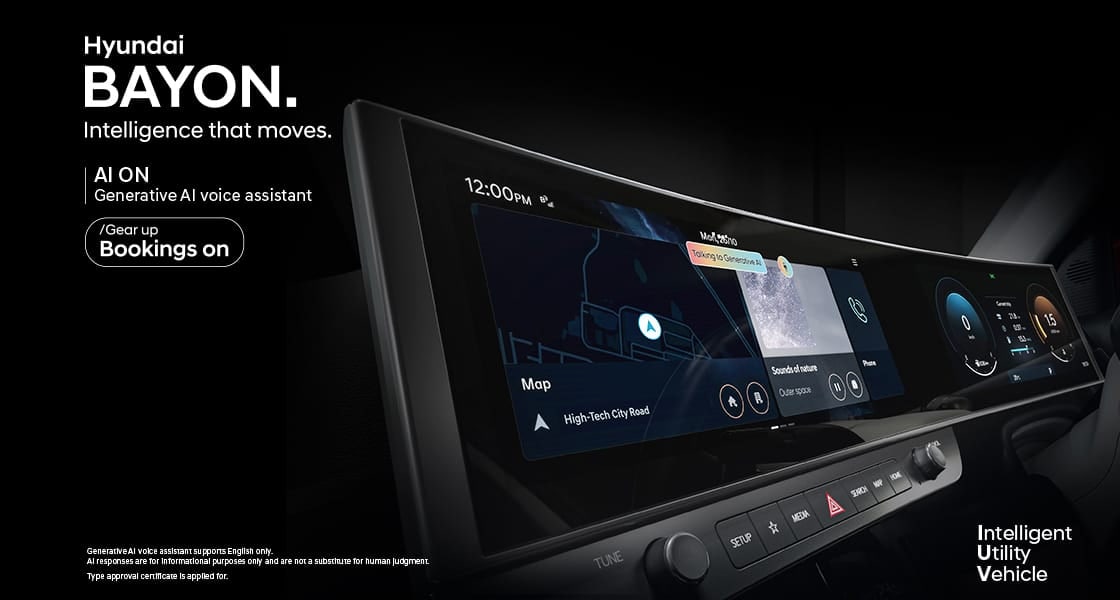
Two 12.3 inch screens form the centre of the Bayon’s digital cockpit. One handles the driver’s information. The other brings navigation, media and connected functions into the same field of view. Hyundai has linked the system to an NVIDIA accelerated connected car navigation cockpit and added a generative AI voice assistant through partnerships with Perplexity and SoundHound.
The assistant is one part of a larger interface. The company says the system recognises commands across English, Hindi and Hinglish, with Tamil, Bengali and Telugu among the supported languages. Hyundai also lists more than 70 Bluelink connected functions and vehicle controller over the air updates for up to 19 controllers. The point is practical: the car can keep some software functions current and let drivers ask for help in natural language while they remain focused on the road.
Safety and space give the technology a setting
The Bayon is 4,245 millimetres long, with a 2,600 millimetre wheelbase and a claimed 505 litre boot. Those proportions give the design a practical measure. India Today’s launch report lists six airbags, electronic stability control and Level 2 Pro ADAS, with a 360 degree camera among the parking aids. Hyundai says the car has more than 80 advanced safety features, with over 35 standard across the range. Equipment can vary by version, so the final specification deserves a careful look beside the price.
The driver assistance suite adds another layer to the car’s technology story. Lane support, forward collision assistance and highway driving assistance are intended to help with parts of a journey that can quietly wear a driver down. The camera and sensors answer a more immediate question in a crowded car park. Together, they make the Bayon’s digital theme feel connected to real tasks, from a long drive home to a tight turn between parked vehicles.
A design story that now has a price
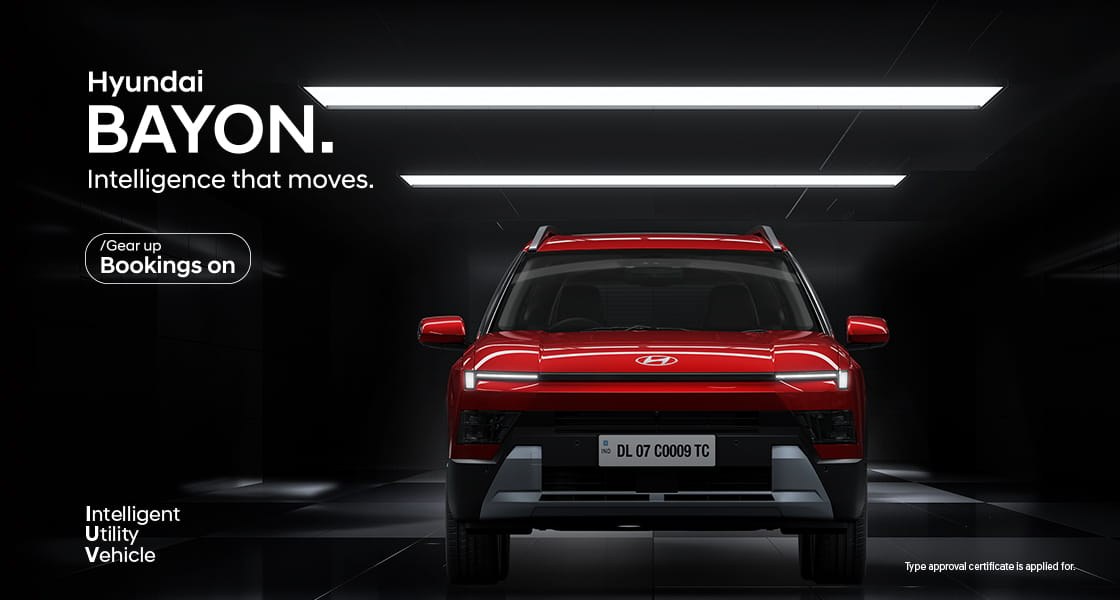
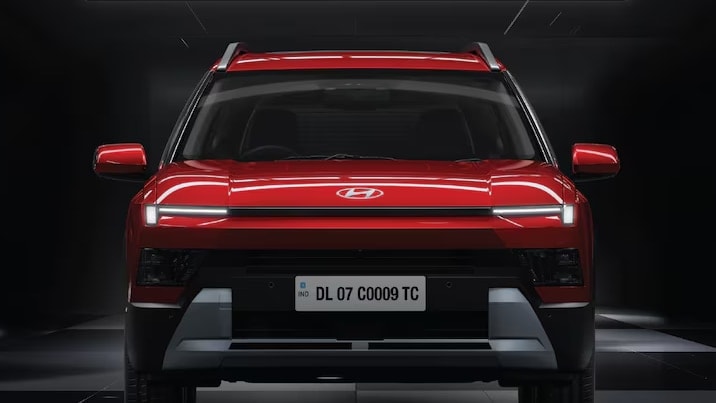
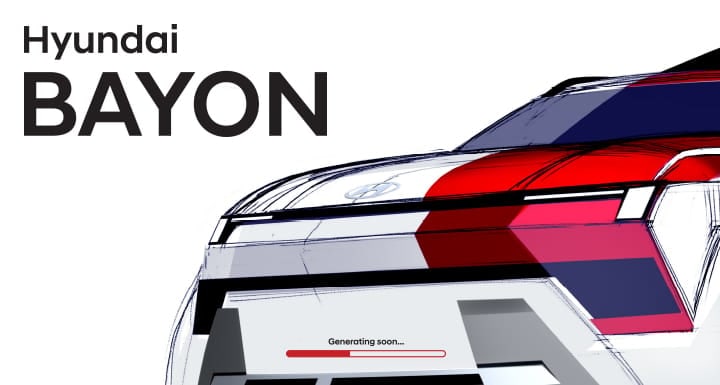
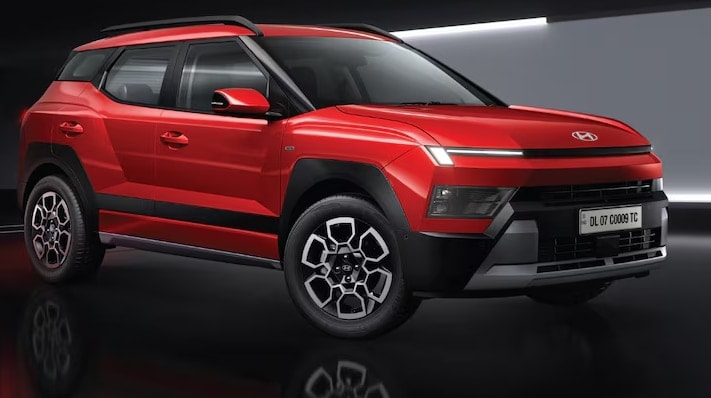
Before launch, Hyundai described the Bayon as an Intelligent Utility Vehicle and made the technology story part of its identity. The red exterior and sharply drawn front lighting give the model an assertive face. The side profile is built around pronounced wheel arches and a rising character line, while the cabin follows through with a broad digital dashboard. The shape is meant to feel contemporary from the road and easy to understand from the driver’s seat.
The Bayon’s first price announcement gives buyers a useful starting point, while variant pricing and delivery specifics will matter when the full range is available. The introductory price is a headline figure. The value question will depend on how Hyundai distributes the major features across the line up, and how the manual and IVT options are priced against one another.
The launch establishes a clear brief: a 115 PS petrol engine, two transmission choices, a wide connected cockpit and a price just below ten lakh rupees. The next test belongs to owners, who will find out whether the interface, comfort and everyday pace come together as naturally on a busy weekday as they do in the launch material. The Bayon arrives with a strong set of promises. Its place in the market will come from how well those promises meet ordinary life.